

An AI tutor does not replace the person who knows the subject. It moves faster when that person is still in the loop, and it goes wrong when a plausible paragraph stands in for them. Three quite different stories this week share that pattern. The tools are moving into physical labs, into legal processes, and into the energy system that will power them. In each case the interesting question is not whether the technology works. It is who is still checking the work.
What we mean by an AI tutor is set out on the AI tutor for schools page.
When the iteration cycle moves to the bench
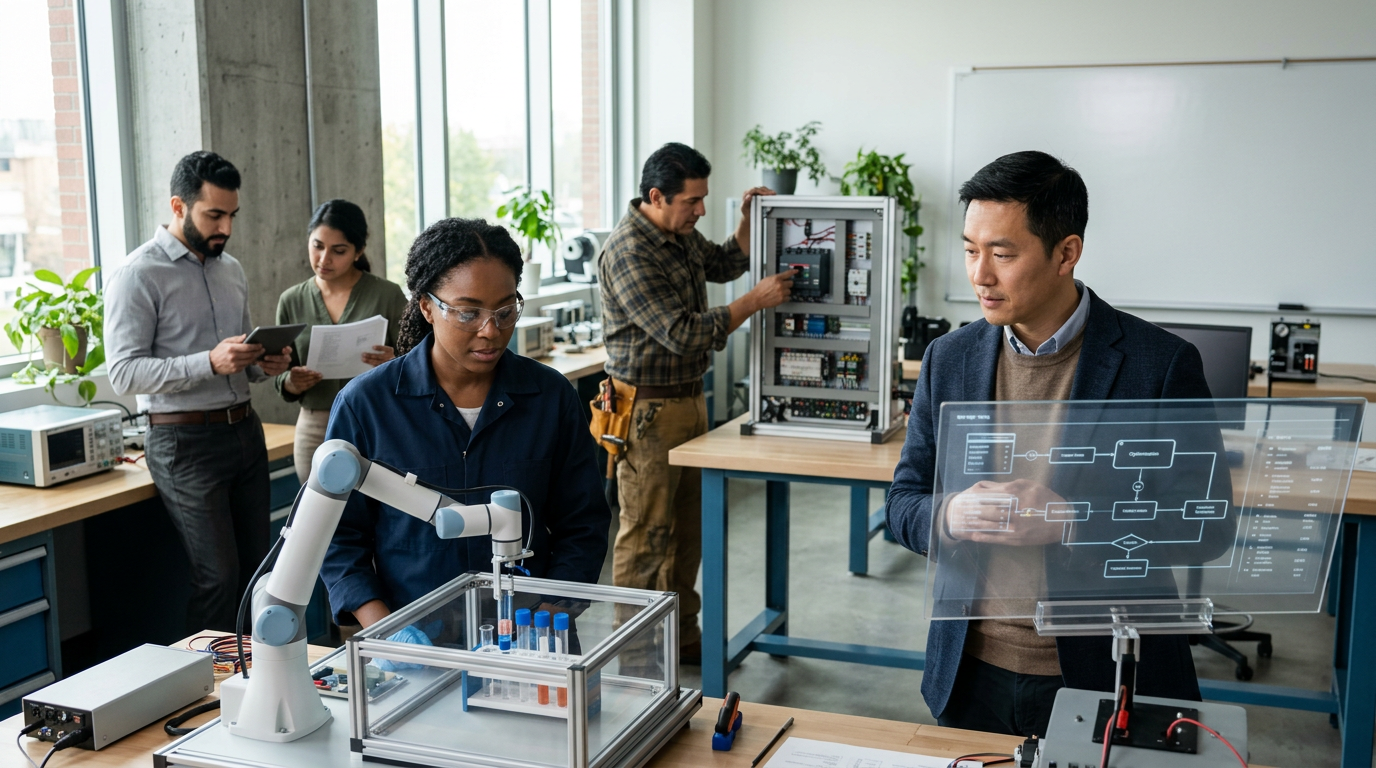
Anthropic's new Model Hardware Standard is designed to let AI agents safely discover, understand and operate physical equipment, from microscopes and liquid handlers to robotic arms. Early work suggests integrations that once took weeks or months could be reduced to hours or even minutes.
One of the scientists in Anthropic's video puts it perfectly: "The iteration cycle is much faster and the focus shifts to asking scientific questions." That is exactly what software development feels like with the new generation of AI coding tools. Less time spent on the mechanics of building, more time thinking about what you are trying to achieve, testing ideas and iterating.
The same shift now looks like it is coming to laboratories, manufacturing and robotics. The value moves to the question you ask, which is also where the expertise has to sit.
The same system, a week later
Last week I wrote about a Macquarie University academic who used AI successfully to challenge an employment decision. This week, the same system is warning about the damage AI can cause when people trust it too much.
Fair Work Commission figures in the reporting are stark: cases are up 40 per cent, 40 per cent of cases used AI, non-English speakers were twice as likely to use it, younger and self-represented people used it more, and 60 per cent of ChatGPT users relied on the free version. In one case, a sacked ALDI worker's use of AI as a "quasi-legal advisor" was condemned.
Both stories can be true at once. AI can help someone navigate a process they could not otherwise afford to navigate. It can also produce confident, well-formatted advice that does not survive contact with a tribunal. The difference is not the model. It is whether a person who understands the domain is still checking the work.
The energy underneath the models
Queensland will be allowed to use coal and gas to power AI data centres, despite the broader push for renewables. I suspect this also applies to the Northern Territory, which had already been planning gas-powered data centres.
The national conversation about AI standards keeps running into the physical constraints underneath the software. Models need power. Power has a location, a fuel, and a politics. Those facts will shape where capability actually gets built, whatever the strategy documents say.
An AI tutor needs a domain expert
I completely agree with a Harvard Business Review piece this week arguing that AI experiments need domain experts, and that organisations have to support them properly. It is exciting working with subject-matter experts. Everyone learns. It reminds me of how Agile started out: super refreshing, because the people who understood the work were in the room with the people building the thing.
That is the through-line for me this week. Agents in a lab, AI in a legal filing, energy policy for data centres: the technology moves faster when experts are close to it, and it goes wrong when they are replaced by a plausible paragraph.